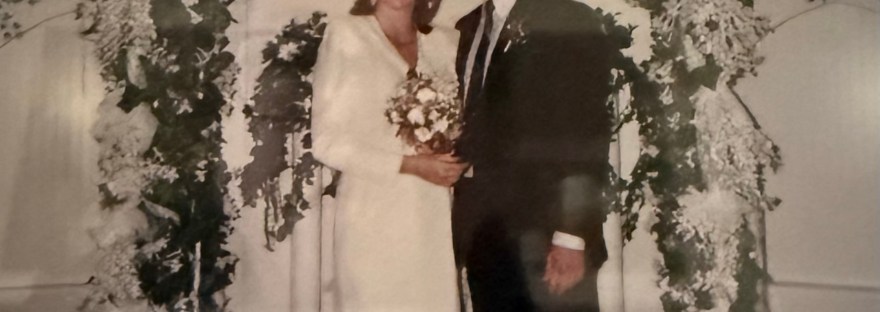
Sharon Rae Nietert, a cherished pillar of her community and the heart of her family, passed away peacefully of natural causes on February 8, 2026. Sharon was the ultimate matriarch, a woman whose warmth and vibrance defined the lives of those she touched. She has now been reunited with her beloved husband, John Nietert, and her daughter, Jennifer Mullen, who preceded her in death. Sharon’s life was a tapestry of creativity and connection. She was an avid crafter and a gifted piano player, often filling her home with music. Known for her competitive spirit and quick wit, she was a fixture at family game nights and a dedicated fan of televised game shows. Her kitchen was the soul of the household, where she spent countless hours cooking for her children and preparing for the traditional holiday gatherings she loved so dearly. Of all the seasons, Christmas held a special place in her heart; she transformed every December into a magical time of tradition, light, and togetherness for her expanding family.
Sharon’s greatest pride was her family. She is survived by her children and their families, who carry forward her lessons of love and resilience: Her children, Scott Nietert, Andrew Nietert, and Kathryn Krieger. Her grandchildren: Elizabeth Nietert, Jacob Nietert, Brandon Mullen, Samantha Mullen, Laura Mullen, Sofia Nietert, Nolan Nietert, Johnathan Krieger, Luke Krieger, and Cordelia Krieger. Her step-Grandfamily: Step-grandson Brad Mullen and step-great-grandchildren Evelina and Steven Mullen.
Sharon was a woman who never missed an opportunity to dance or to share a meal with those she loved. Her absence leaves a profound void, but her spirit will be felt every time a piano plays, a game is won, or a family gathers around the table for the holidays. She will be profoundly missed, but never forgotten.
For me, this is extra difficult. I am currently residing, and have been taking care of Sharon’s home for months now. Packing, separating, cleaning a home that went untouched for years. So many broken pipes, floorboards, roof, etc., the list goes on and on and apparently has become yet another responsibility for my husband. (As if his plate is not already overflowing.) It’s a tedious task that is taking a lot longer than expected.
It brings to light the failures of our choices. We had intended to part half year here in Texas, while maintaining a home in Colorado and live part of the year there. We are pleased to announce that our business, LoneStar Home Watch, is taking off and I have had to live out of a suitcase for the past months. The Colorado home that we furnished, poured our hearts into, is now for sale in a market that is saturated with homes that buyers cannot afford. We have no showings.
Not only am I reminded of Sharon when I view every wall, or use her dishes to eat on, or her pots and pans to cook with but down to the towels, the sheets, all of it is a constant reminder, {This is NOT my home,} I feel unsettled, lost, removed, and yet thriving in a business that has taken me two years to grow. The paradigm shift is palpable.
Scott, my husband is understandably distraught, disorganized and fraught with duty and tasks. It’s overwhelming on top of an already burdened life of duty. Sharon is the 15th foundational loss we have suffered since we moved here in 2016. That’s 10 years. That’s a lot of servicing others with no benefit of our own. We losing more than we’re gaining and we are reminded every time we open our eyes and look around. Missing our real home at the lake, and unable to spend any time there, it looks like a sale there too in the midst of this economic downturn that rivals the 2008 catastrophe! What do we do?
We sit, have patience, hesitate our words, speak our wisdom, and love unconditionally. If that doesn’t work, we cannot take it personally. No has any idea of the insurmountable obstacles that we are facing together. Scott is a juggler and expert at the process, and I am jumping in and out as he needs me as the emotional weight of it all falls heavily on both our shoulders. Give us some grace. Allow us the same love we offer, and be patient with us. Kindness goes a long way.
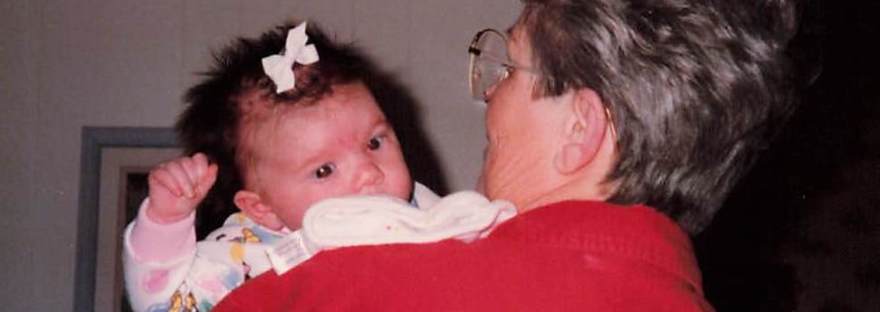
The picture is in 1994 with my daughter, Elizabeth and her grandma.