Journal Entry

The Long Goodbye: Navigating Anticipatory Grief and Chronic Illness

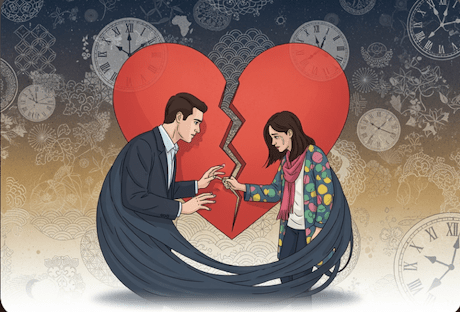
When we think of grief, we often think of it as a destination—a place we arrive at only after a loss has occurred. But for those living through the chronic or terminal illness of a loved one, grief doesn’t wait for a final breath. It settles in early, making itself at home in the quiet corners of the caregiver’s heart.

This experience is known as anticipatory grief, and it is one of the most complex layers of the human experience. At The Soft Armor, we believe in acknowledging these heavy truths so we can better equip ourselves for the journey.

Understanding the “Invisible” Loss

Anticipatory grief is unique because it isn’t just about the fear of the future; it’s about the losses happening in the present. It is the trauma of watching someone’s world shrink. You might be grieving:

• The loss of a role: Moving from partner or child to full-time caregiver.

• The loss of shared dreams: Letting go of travel plans or future milestones.

• The loss of personality: Navigating the way illness can change a person’s temperament or cognitive abilities.

The Trauma of the “Wait”

Living in a state of constant high alert—waiting for the next phone call, the next scan, or the next dip in health—creates a specific kind of physiological trauma. Your nervous system stays “on,” prepared for a crisis that hasn’t fully arrived but feels inevitable.

This sustained stress can lead to “caregiver burnout,” but it’s more than just exhaustion; it’s the soul’s reaction to holding onto someone who is slowly slipping away.

Finding Your “Soft Armor”

How do we protect ourselves while remaining open and present for those who need us?

1. Grant Yourself Permission: Understand that feeling grief right now doesn’t mean you’ve given up hope. It means you are processing the reality of the situation.

2. Acknowledge the Secondary Losses: It is okay to be sad about the “small” things—the lost Sunday morning coffee routines or the quiet house. These are the threads of your daily life being pulled away.

3. Create Pockets of Stillness: When the trauma of illness feels loud, find a ritual that grounds you. Whether it’s a heavy blanket, a specific scent, or five minutes of intentional breathing, find the “armor” that makes you feel safe.

4. Seek Community: Grief is isolating, but you are not alone. Sharing your story with those who understand the “long goodbye” can lighten the emotional load.

Moving Through, Not Over

There is no “getting over” the trauma of sickness and loss. There is only moving through it, one heartbeat at a time. By acknowledging the grief we feel before the loss, we honor the depth of our love and the difficulty of the path we are walking.

Be kind to yourself today. You are doing the hardest work there is.

Inspiration

Thirty-Two Years of the Leap

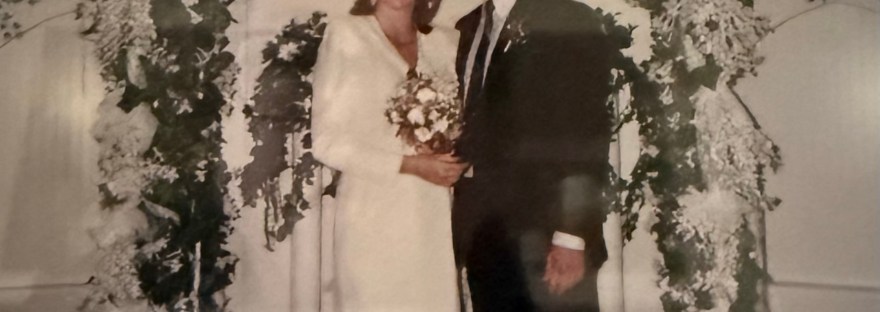
I look at this picture and I can still feel my knees shaking. I remember the weight of the question hanging in the air: would this marriage last for months, for decades, or for a lifetime? Behind my smile, I was a whirlwind of emotion—deeply honored to be Scott’s wife, yet breathless from the whirlwind of it all. “Do you want to get married today?” he had asked just hours earlier.

An elopement at the Rockwall wedding cottage, a quick trip to Dillard’s Travel, and suddenly we were on our way to San Antonio. We didn’t have much then, just a weekend at SeaWorld and each other. In this photo, I was four months pregnant and, if I’m honest, I was scared to death. I was terrified that I wasn’t ready for motherhood—that I wasn’t up to the monumental challenge of raising a child.

And yet, I felt safe.

Wrapped in his arms, I found a sanctuary. Scott brought with him a history of steadiness that I leaned on completely. I trusted that he could navigate us through the unknown; I believed he was capable enough to help rewrite the parts of me that felt broken. I took the leap because of the man he was—a product of a home filled with honor and intentional love. I saw his mother, a woman born to parent, and his father, a jovial and present man whose every move was rooted in kindness. I knew Scott would bring that legacy into our home.

For thirty-two years, he has done exactly that.

Our journey hasn’t been perfect. Anyone who truly knows us can attest that there were seasons of selfishness, moments where we prioritized our own interests over the “us.” But whenever level heads prevailed, the love that sparked that first impulsive “yes” brought us back to center. It kept us learning, growing, and moving in the same direction.

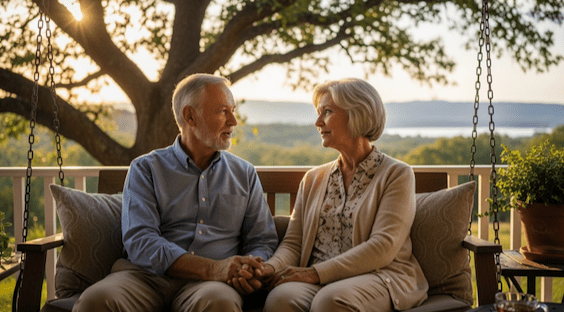
Today, he is my absolute best friend. Our lives are a tapestry of shared ideas, a common moral compass, and a deep, aligned faith. Whether it’s our hobbies or our values, we simply enjoy life more when we are doing it together. Looking back at that shaking girl in the photograph, I wish I could tell her: Don’t worry. You chose well.

Human Interest

When Others Judge – Holding it Together

These past weeks have been a DOOZY for me. While I used to be a bad ass during stressful situations, I have come to learn with experience that loss, real loss, devastating – change – your – life -loss can happen in a moment. Sometimes I think I am one more change away from losing my mind. The older I get the more the fear of loss is real. There’s been a great deal of trauma involved, and that lends itself to more anxiety. Faith. I must have it. God’s got this I tell myself. Naturally, I must learn to believe that.

People often get mad when they’re afraid because anger can be a defense mechanism to cope with the uncomfortable feelings of fear and a sense of vulnerability. If trauma has taught them they cannot trust an unknown outcome, this can be very scary for the people on the other side of that fear. Both fear and anger trigger the “fight-or-flight” response, releasing stress hormones and preparing the body for action. When the nervous system is activated by fear, an individual may unconsciously choose to express this heightened energy as anger, a way to regain a sense of control and protect themselves from a perceived threat.

Anxiety and anger activate the body’s fight-or-flight (stress) response, which triggers the hypothalamic-pituitary-adrenal (HPA) axis to release cortisol, the primary stress hormone. Specifically, the hypothalamus releases corticotropin-releasing hormone (CRH), which signals the pituitary gland to release adrenocorticotropic hormone (ACTH). This, in turn, prompts the adrenal glands to produce and release cortisol into the bloodstream, providing energy to deal with the perceived threat.

I am not sure what the answer is to make sure people around me feel loved. If I lose my shit, something awful has just happened. I am in the thick of cortisol jet streaming throughout my body, and I am one comment away from either losing my mind or walking away because the emotion is too great for me. Horrible but true.

Breathe Beck. Just Breathe.

Inspiration

The Informed Choice: What No One Tells You About Staying Home

When I first chose to stay home with my babies, I thought I was making the best, most loving decision for my family. I was educated, informed, and determined to give my children the care and presence I never wanted to outsource. But what nobody tells you—what no one warns you about—is the invisible contract you’re signing when you make that decision. And unless you sit down and have a brutally honest conversation with your significant other, you may find yourself in a position you never intended: servitude.

Let me be clear—I’m not talking about the joy of raising your own children or the privilege of being there for their first steps, their giggles, and their scraped knees. I’m talking about the *other* job description that comes with “stay-at-home mom.” The one that’s rarely discussed, but always expected.

When you choose to stay home, unless you draw boundaries and set expectations, you’re not just agreeing to childcare. You’re silently agreeing to every single household duty—inside and out. That means:

– All the cleaning, every day, top to bottom.

– Home maintenance, pest control, window washing, laundry, linens, towels, annual curtain cleaning, sofa scrubbing.

– Taking care of pets, organizing PTA meetings, volunteering at school, managing play dates and social calendars—for the kids, not yourself.

– Cooking dinner night after night, planning meals within a budget, and somehow making the money stretch.

– Managing the “allowed” income, often with no guarantee that anything left over is truly yours.

– And after all that, you haven’t even begun to address your own needs, friendships, or personal time.

The most insidious part? There’s no clocking out. It’s a 24/7 job. The minute you finish the dishes, someone dirties another. The laundry is never-ending. The sense of accomplishment is fleeting, if it ever comes at all.

I remember the days when I would schedule cleaning baseboards, prep dinner so it was hot when my husband walked in, have the kids bathed and in bed so all he had to do was eat, relax, and watch TV. My home was spotless, my children were cared for, and my partner’s only job was to recover from his day. If that’s the life you want, and it works for you—embrace it with gratitude. But make sure you know what you’re signing up for.

If you haven’t talked to your spouse or partner about who does what—about who handles the lawn, the dinners after 7pm, the late-night emergencies, the never-ending chores—you’re not making an informed decision. My advice? Write it all down. Decide together who’s responsible for what. Make room for your own time, your own needs, your own life.

Because here’s the truth: nobody in their right mind would sign up for a lifetime of servitude to someone who works an eight-hour job, unless they truly understood what that means. And for the women who do all of this *and* work outside the home? You are my heroes. I did it for 15 years, and it’s a different kind of stress—one that no one is prepared for until they’re living it.

So before you make your choice, talk. Plan. Write it down. Make sure your decision is truly informed. Because loving your family shouldn’t mean losing yourself.

Human Interest

Possession vs. Obsession: How Control Can Ruin Relationships (And What Healthy Love Looks Like)

When we talk about love and relationships, words like “possessive” and “protective” often get tangled up. It’s easy to mistake one for the other—especially when emotions run high. But there’s a world of difference between caring for someone and trying to control them. That difference can make or break a relationship.

The Fine Line: When Does Protection Become Possession?

It’s natural to want to keep someone you love safe. But when “protection” becomes a reason to monitor, restrict, or dictate another person’s choices, it crosses into obsession and control. This shift is rarely obvious at first. It might look like:

– Constantly checking in (“Where are you? Who are you with?”)

– Deciding who your partner can talk to or spend time with

– Making all the decisions “for their own good”

– Feeling anxious or angry when they assert independence

While these actions are often justified as “caring,” they can leave the other person feeling suffocated, distrusted, and emotionally isolated.

Cultural Roots: Why Some Behaviors Are Normalized

Culture plays a huge role in shaping what we see as “normal” in relationships. In many societies, traditional gender roles have favored male dominance—sometimes subtly, sometimes overtly. Historically, men have been encouraged (or expected) to be the “head of the household,” the protector, and the decision-maker. In some cultures, this is still seen as a sign of strength and love.

But these norms can blur the line between protection and control. In patriarchal systems, controlling behaviors may be excused or even praised—while women are taught to accept or accommodate them. In contrast, cultures that value equality and autonomy tend to view such behaviors as red flags.

Examples Across Cultures:

– Western cultures: Increasingly value individual autonomy; controlling behavior is often called out as unhealthy.

– Traditional societies: May emphasize family honor, obedience, or male authority, making it harder to recognize or challenge controlling dynamics.

– Modern urban cultures: Younger generations are questioning old norms, but systemic biases can linger.

The Psychology of Male Dominance

From a psychological perspective, men raised in male-dominant systems may internalize beliefs that:

– Their role is to “lead” or “protect”—even if it means overriding their partner’s wishes.

– Jealousy or control is a sign of love.

– Vulnerability or equality is weakness.

These beliefs are reinforced by media, family, and sometimes even laws. Over time, they can create patterns of obsessive control, justified as “caring” or “protective.”

How to Recognize Obsessive Control (Even If You Think You’re Being Loving)

If you’re wondering whether your protective instincts have crossed the line, ask yourself:

– Do I trust my partner to make their own choices?

– Do I feel anxious or angry when they’re independent?

– Do I need to know where they are at all times?

– Do I make decisions for them, believing I “know best”?

– Would I be okay if they set the same rules for me?

If any of these questions make you uncomfortable, it might be time to reflect.

Moving from Control to Care: What Healthy Protection Looks Like

Healthy relationships are built on trust, respect, and mutual support. Here’s how to shift from control to genuine care:

– Communicate openly: Share your concerns without accusations or ultimatums.

– Respect boundaries: Allow your partner space to be themselves, even if it feels uncomfortable.

– Challenge old beliefs: Ask yourself where your ideas about “protection” come from. Are they rooted in love, or in fear?

– Seek support: Therapy or counseling (individually or as a couple) can help untangle deep-seated patterns.

Final Thoughts: Love Without Chains

True love isn’t about possession or obsession. It’s about partnership—where both people feel safe, respected, and free to grow. Cultural traditions and personal history shape how we love, but we always have the power to choose a healthier way forward.

If you’re struggling with these issues, know that you’re not alone. Seeking help is a sign of strength, not weakness. Love should lift us up, not hold us back.

Human Interest

Why Partners Feel Differently About Sex as They Age—And How to Stay Connected

As couples grow older together, it’s common for their feelings about sex to shift. Sometimes, one partner’s desire changes more than the others. This can feel confusing, even isolating—but you’re not alone, and there’s a lot of research (and real-life wisdom) to help make sense of it.

The Clinical Perspective

For Men:  

Testosterone levels naturally decline with age, which can lead to a gradual decrease in libido. Medical issues (like heart disease or diabetes), medications, or even stress can also play a role. Many men report that physical intimacy becomes less about performance and more about connection as they age.

For Women:  

Women may experience hormonal changes due to menopause, leading to symptoms like vaginal dryness, discomfort, or a drop in desire. Emotional factors—like self-image, life transitions, or caregiving stress—can also impact how women feel about sex. But for many, intimacy grows richer and more meaningful, even if the frequency changes.

Clinical Proof: 

A 2020 study in the Journal of Sex Research found that while sexual frequency often declines with age, emotional satisfaction and intimacy can actually increase for many couples. Open communication and empathy were key predictors of satisfaction, regardless of physical changes.

The Human Side

Let’s be honest: aging brings a lot of changes, and not all of them are easy. But it also brings wisdom, patience, and a deeper appreciation for true connection. Sometimes, what partners need most is simply to feel seen and accepted as they are in this chapter of life.

From a Male Perspective: 

It’s normal to feel vulnerable if your body isn’t cooperating the way it used to. You might worry about disappointing your partner or losing a part of your identity. Remember, intimacy is about more than just sex—it’s about feeling close, valued, and respected.

From a Female Perspective: 

You might feel frustrated by physical changes or a shifting sense of desire. Or maybe, for the first time, you feel free to express what you really want. It’s okay to grieve what’s changed and celebrate what’s new.

What Can Couples Do?

– Talk Openly:  

  Start with honesty and kindness. “I’ve noticed some changes, and I want us to talk about how we’re both feeling.”

– Be Curious, Not Critical: 

  Ask questions, listen deeply, and avoid assigning blame.

– Explore Together:  

  Try new ways of being close—touch, massage, cuddling, or non-sexual intimacy.

– Seek Support:  

  A therapist or doctor can help with physical or emotional challenges.

– Stay Playful: 

  Laughter, flirting, and shared adventures can reignite connection.

Communicating Your Needs

– Use “I” statements: “I miss feeling close to you,” or “I’d love to try something new together.”

– Schedule regular check-ins—these don’t have to be heavy, just honest and caring.

– Remember, your needs matter—and so do your partner’s.

Aging changes a lot, but it doesn’t have to mean losing intimacy or connection. With understanding, empathy, and a willingness to adapt, couples can find new ways to love—and be loved—through every season of life.

Human Interest

Retrospection of July 4th – Gratefulness

This weekend, my heart is full. My adult children—independent, capable, and busy with their own lives—are home for a few precious days. As I sit here reflecting, I’m swept up in a wave of gratitude and nostalgia.

When Scott and I were raising Beth and Jake, it was just the four of us, moving from place to place, creating our own little world wherever we landed. Without extended family nearby, we became each other’s everything. Every adventure, every challenge, every laugh and tear, we faced together.

Ten years ago, our family grew in ways I could never have imagined. Welcoming Brandon, Sami, and Laura (and sometimes their brother Brad & his kids Evie and Steven) into our home was a leap of faith and love. What moved me most was how quickly Beth and Jake—then college-aged—rushed home to help. They made sure their new siblings felt safe, loved, and truly part of a family. Their compassion and support inspired me then, and it still does today.

This weekend, all of us—plus two Brittany pups and a black lab—piled onto the couches, wrapped in cozy blankets, watching movies as fireworks lit up the night outside. For a fleeting moment, time seemed to stand still. Love filled the room, and I felt a tear slip down my cheek—grateful for this rare pause in our busy lives.

The Fourth of July always brings memories of my parents’ anniversary, and this year, I felt their presence even more keenly. Losing my mom a few years ago reminded me just how short and precious life is. Sitting here, surrounded by family, I’m reminded that these simple, shared moments are the greatest blessings of all.

Human Interest

Unbreakable: What I’ve Learned About Stress, Strength, and Moving Forward

There are moments in life when stress doesn’t just tap you on the shoulder—it knocks you flat. Recently, I found myself in one of those moments. The pressure built up so intensely that my body waved a white flag: shingles, right inside my eyes. The headaches, exhaustion, and relentless fatigue were unlike anything I’d known. For someone who has always prided herself on grit and stamina, it was a humbling wake-up call.

When I was younger, I wore stress like a badge of honor—thriving on the adrenaline, juggling a million things, always pushing for more. But as the years have added up, so has the cost of that constant hustle. This older body? It doesn’t bounce back the way it used to. Every ache, every bit of fatigue, is a reminder that I’m not invincible.

But here’s what’s unshakable: my spirit.  

I am tenacious to the core. Even when my body is tired, my will is fierce. I believe—truly—that the mind can overcome anything life throws our way. I refuse to let a diagnosis, a setback, or a tough season define me. Instead, I choose to show up. I show up with purpose, with intent, and with the determination to do what needs to be done—no matter how hard it feels.

That’s what courage looks like.  

It isn’t always flashy or loud. Sometimes, it’s just putting one foot in front of the other when you’d rather stay in bed. It’s making the call, writing the email, or meeting the client when your energy is running on empty. It’s refusing to let fear or pain dictate your story.

Resilience isn’t about never falling down—it’s about how many times you get back up.  

So even as my cortisol levels wreak havoc and my body begs for rest, I keep moving forward. One deliberate step at a time. Because that’s who I am—unstoppable.

If you’re facing your own season of stress or struggle, know this:  

You are stronger than you think. Your spirit is tougher than any challenge. And even when life tries to slow you down, you have the power to keep going.

Here’s to every one of us who keeps showing up, no matter what.  

We are unbreakable.

Uncategorized

Heaven-Touched Views: Life in a Craftsman Mountain Home

There’s a kind of magic that only exists deep in the heart of the mountains, where a craftsman-style home nestles quietly among the pines and wildflowers. Here, the world feels both infinite and intimate—views stretch up to heaven, blue and endless, while the sturdy beams and warm wood of the household you close, safe and grounded.

Every window frames a living masterpiece: sunbeams spilling over distant ridges, clouds drifting lazily above peaks, and forests whispering secrets only the mountains know. The air is always a little cooler, edged with the scent of pine and earth, as if the whole world is taking a deep, cleansing breath.

Outside, playfulness is the order of the day. Pups dart and dash across the meadow, chasing birds that swoop just out of reach and small critters that scurry through the brush. Their joy is contagious, their energy a gentle reminder to savor every moment—to let laughter echo off the hills and let curiosity lead us down winding paths.

There’s so much to do here that you can’t do anywhere else, especially when the temperatures dip and the world feels fresh and new. Midday rides on horseback become adventures through golden light and dappled shadows, the rhythmic clop of hooves blending with the rush of a nearby stream. Biking through valleys, the landscape rolls out before you—each turn revealing a new secret, a new thrill. The call of the wild grows stronger as you climb higher, ATV roaring up to the tallest points, where the world falls away beneath you and the sky feels close enough to touch.

Fly fishing in crystal clear waters is a meditation, a dance between patience and hope. The sun glints on the surface, the line arcs gracefully, and for a moment, there’s only you, the water, and the promise of something wonderful just beneath the surface.

And when the day’s adventures are done, there’s nothing like gathering around a table filled with homegrown ingredients—crisp greens, sweet berries, and the hearty flavors of food crafted with love and care. The laughter is warmer, the stories richer, and the sense of belonging deeper.

In this place, the quiet is never lonely. It’s filled with the music of the wind, the playful bark of a dog, the distant call of a bird, and the gentle hum of a life well-lived. Here, in the crisp mountain air, every moment is an invitation—to play, to reflect, to love, and to truly live.

Uncategorized

The Serenity of the Lake: Where Stillness Meets Joy

There’s a hush that settles over the water at dawn, the kind of quiet that feels sacred—almost as if the world is holding its breath in reverence. The lake stretches out in front of me, a glassy expanse reflecting the gentle blush of early morning. Here, time slows. Here, my soul exhales.

I watch as my dogs, those furry bundles of kinetic joy, race along the shoreline. Their paws kick up dew-damp grass, their tails high with purpose and delight. They chase each other in wide, looping arcs, tongues lolling, eyes sparkling. There’s a kind of magic in their movement—a pure, unfiltered happiness that shoots straight to the heart and fills me with a calm, unexpected rush of dopamine. It’s impossible not to smile, not to let their exuberance seep into my bones and soften the edges of whatever weight I carried to the water’s edge.

Above us, the wind stirs the leaves in the trees. They flitter and dance, catching the light in a thousand shades of green and gold. I find myself watching the way each leaf trembles, the way the branches sway and bow. It’s a gentle reminder that God lives here, in the quiet beauty of the woods, in the hush between the breeze and the water, in the ordinary miracle of another day. The world feels both impossibly vast and intimately close, as if I’m being cradled in the palm of something loving and eternal.

Out here, the remoteness isn’t lonely—it’s restorative. The silence isn’t empty—it’s full, brimming with the subtle music of nature: the distant call of a bird, the soft lapping of waves, the rhythmic panting of tired, happy dogs. In these moments, I remember how alive I am. I feel the pulse of my own heart, the steadiness of my breath, the quiet joy of simply being. The lake’s serenity fills me up, washing away the noise and hurry of everyday life, leaving only gratitude and peace.

Sometimes, all it takes is a quiet morning, a wild-hearted dog, and the shimmer of sunlight on water to remind me of what matters. Of how much love there is in the world—whispering through the trees, running along the shore, waiting patiently for us to notice.